
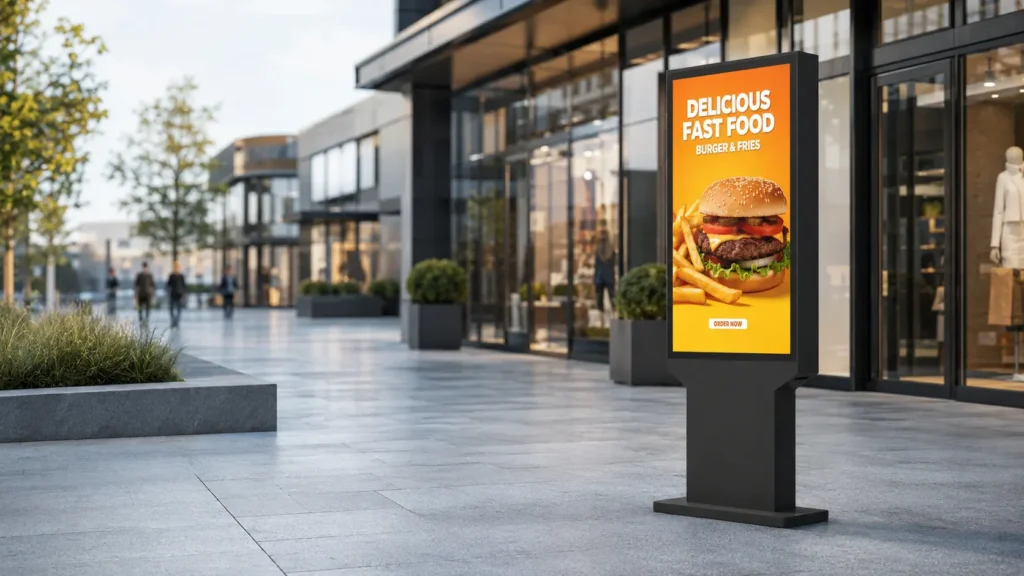
Display brightness is usually measured in nits, or candela per square metre. Choosing the correct brightness is essential: a screen that is too dim becomes unreadable, while excessive brightness can increase heat, power consumption and cost without improving the viewing experience.
Indoor Commercial Displays
For indoor environments with controlled lighting, approximately 400 to 700 nits is often sufficient. Typical applications include reception areas, meeting rooms, retail aisles and indoor information screens. The final choice should still consider reflections, viewing distance and whether strong spotlights face the screen.
Window-Facing Displays
Displays installed behind shop windows need more brightness because glass reflects ambient light and reduces perceived contrast. Depending on window direction, shading and local sunlight, 1,500 to 3,500 nits is a common working range. South- or west-facing windows may require higher output than shaded storefronts. Anti-glare glass, a narrow bezel and effective heat dissipation also improve real-world visibility.
Outdoor Digital Signage
Outdoor displays must remain legible under changing daylight. Covered locations may perform well around 1,500 to 2,500 nits, while direct-sunlight applications often require 3,000 to 5,000 nits. Brightness should be considered together with IP protection, temperature management, UV exposure and automatic brightness control. A light sensor can reduce output at night, improving comfort and lowering power use.
Balance Brightness, Heat and Efficiency
Higher brightness produces more heat and increases electrical demand. Enclosure design, ventilation strategy and component selection therefore matter as much as the panel specification. A well-engineered high-brightness display maintains stable performance without unnecessary energy use or accelerated component wear.
A Practical Selection Checklist
Before specifying a display, confirm whether it will be indoors, behind glass or fully outdoors; note the direction and duration of direct sunlight; measure available space and viewing distance; check local temperature and weather conditions; decide whether automatic brightness adjustment is required; and review installation, ventilation and maintenance access.
Sky Eagle offers commercial displays from approximately 400 to 5,000 nits and can recommend a configuration based on the actual installation environment. Sharing site photographs, placement dimensions and operating hours helps our engineering team propose a more accurate solution.